
Navigating foreign exchange regulations is essential for businesses engaged in international trade and investment. Our foreign exchange law practice provides expert advice on foreign investment, repatriation of funds, compliance with exchange control regulations, including the Foreign Exchange Management Act (FEMA), Foreign Direct Investment (FDI) policy, Overseas Investment (OI) policies and related matters.
Cross Border Structuring and Investments
Advising businesses and startups on cross-border corporate structures, holding and subsidiary relationships, inward and outward remittances, place of effective management (POEM), permanent establishment aspects, and interplay between FEMA and tax laws.
Intra-Group Transactions
Strategic advice on setting up and defending intra-group cross-border transactions such as corporate guarantees, cross-chargeable services, royalty and licensing payments, intra-group trade transactions, besides others.
Import and Export of Goods and Services
Legal advisory on various issues arising in the import and export of goods and services from third parties and group entities, interplay between customs laws, FEMA, and shipping and banking laws.
Valuation of Transactions and Assets
Advisory on and defense of valuation of cross-border transactions harmonizing internationally acceptable accounting principles, transfer pricing valuation, and customs SVB valuation.
Branch / Liaison / Project Offices
Setting up of branch offices, liaison offices, and project offices of foreign businesses in India, and of Indian entities outside India, with a collective application of FEMA, international tax, and customs laws.
Liberalized Remittance Scheme (LRS)
Advisory and representation related to remittances made using LRS including investments in foreign shares and securities, asset purchases etc.
Debt-Financing, ECBs
Advising clients on raising debt funding through the external commercial borrowings route and other routes, conversion of debt into equity, debt repayments and write-offs.
Foreign Contributions (FCRA)
Offering counsel related to issues arising from the Foreign Contribution Regulation Act, 2010, and the interplay between FCRA and FEMA.
Anti-Money Laundering and CFT Reporting
Assisting businesses understand and comply with the interplay between FEMA, money laundering, and criminal laws.
Dispute Resolution
Assisting clients settle their contraventions under FEMA and other laws through representation and litigation approaches before various authorities and courts.
More Insights

22-06-2026
8
min read
Claim Admission is not Debt Acknowledgement: Supreme Court on RP’s Role & Limitation under the IBC
Can admission of a claim by a Resolution Professional extend limitation under section 18 of the Limitation Act? In Shankar Khandelwal v. Omkara Asset Reconstruction Pvt. Ltd., the Supreme Court answered this question in the negative, holding that claim admission during CIRP is merely a statutory claim-verification process and not an acknowledgement of debt. The ruling clarifies the RP’s non-adjudicatory role and reinforces important principles governing limitation under the IBC.

06-04-2026
5
min read
Minority Exit under S. 66: The Supreme Court on Fairness, Valuation, and the Limits of Judicial Scrutiny
The Supreme Court’s ruling in Pannalal Bhansali v. Bharti Telecom Ltd. clarifies the contours of fairness under Section 66 of the Companies Act, 2013. It reinforces a market-based approach to valuation, affirms the permissibility of DLOM, and underscores judicial deference in the absence of oppression, marking a significant shift in minority exit jurisprudence.
12-11-2025
14
min read
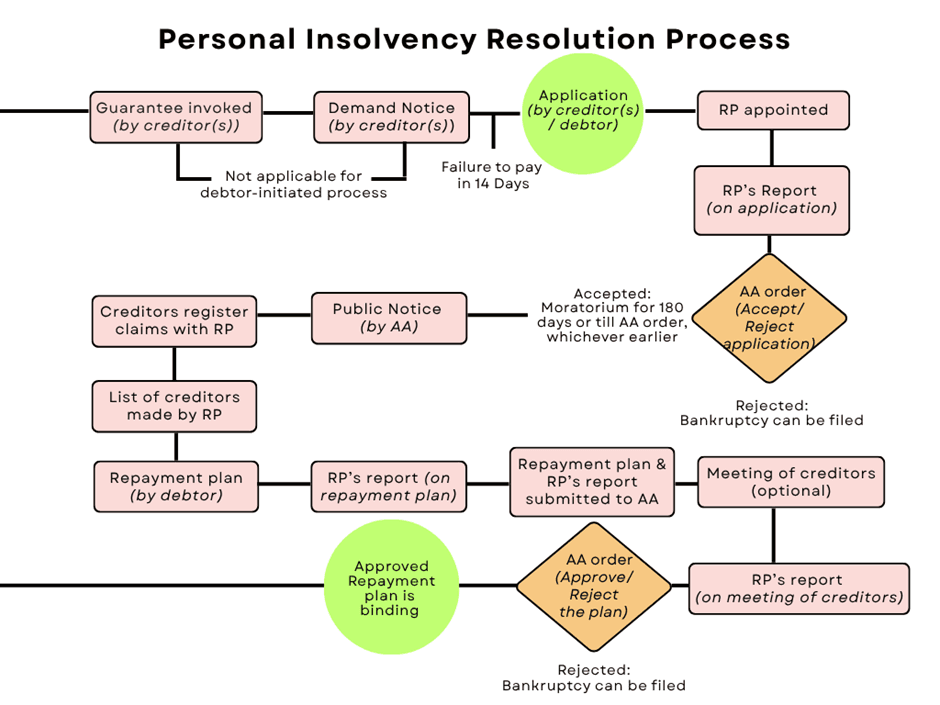
A Bird’s Eye View of the Insolvency and Bankruptcy Framework for Personal Guarantors under the IBC with Recent Judicial Developments
A concise overview of the personal insolvency and bankruptcy framework for personal guarantors under the IBC, with key NCLAT and NCLT rulings shaping the law. This piece explains initiation, moratoriums, repayment plans, creditor rights, bankruptcy triggers, and the 2025 Amendment Bill, offering a clear snapshot of the evolving jurisprudence and its practical implications for stakeholders.