
Compounding provisions under Foreign Contribution (Regulation) Act, 2010 amended w.e.f. 01.07.2022 – 5 new offences now made compoundable
Introduction:
The Foreign Contribution (Regulation) Act, 2010 (“FCRA”) regulates foreign donations/contributions coming into India by regulating the acceptance and use of foreign contributions or foreign hospitality by certain individuals, associations and companies. FCRA is a stringent law and non-compliance with the provisions of FCRA can lead to prosecution.
However, certain offences can be compounded u/s 41 of FCRA before the initiation of prosecution. The list of offences which can be compounded u/s 41 is notified by the Central Government by way of notifications issued from time to time. W.e.f. 01.07.022, 5 new offences under FCRA have now been made compoundable. This update captures the legal position regarding the compoundable offences under FCRA both prior to and post 01.07.2022.
Legal position up to 01.07.2022:
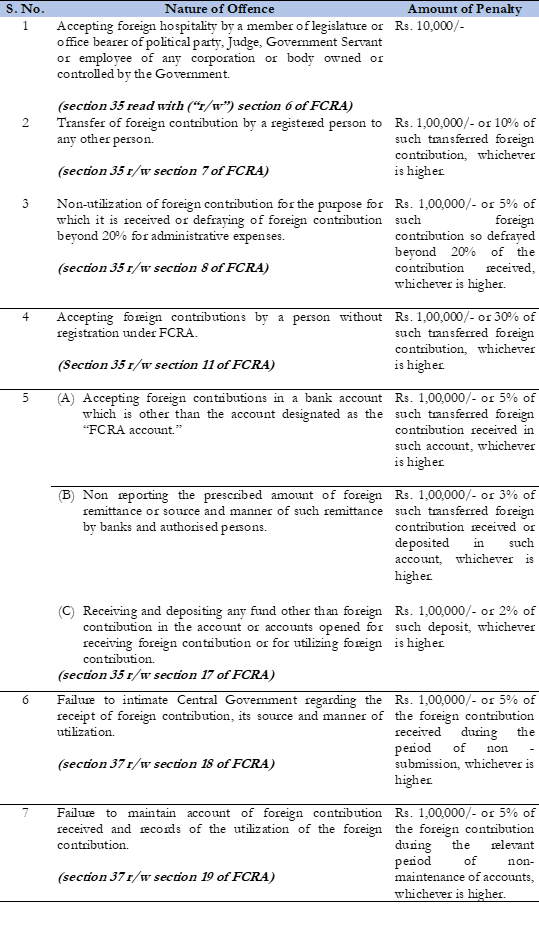
The table below captures the offences under FCRA which were compoundable till 30.06.2022.
Legal Position w.e.f. 01.07.2022:
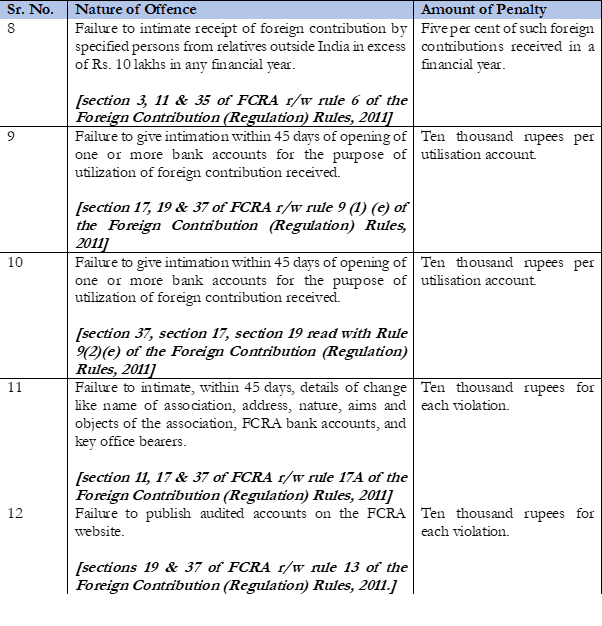
The Central Government has now issued vide MHA Notification No. S.O. 3025 (E) dated 01.07.2022, adding 5 new offences under FCRA which can now be compounded. The table below captures the new compoundable offences under FCRA:
Noteworthy points:
Conclusion:
The above amendments to the compounding provisions under FEMA will provide significant relief to persons in the non-profit sector receiving foreign contributions and help them avoid litigation in cases of genuine and inadvertent reporting lapses. The amendments will significantly reduce litigations for minor infractions of FCRA.
*Authored by Aishwarya Pawar, Advocate at Metalegal Advocates. The views are personal and do not constitute legal opinion. *

AUTHORED BY
More Insights

25-08-2026
12
min read
A Game of Treasure Hunt: Service of GST Notices and Orders under S. 169 of the CGST Act and the Emerging Split Among High Courts
Luxmi Traders addresses a fundamental question in GST adjudication: can a notice or order be treated as duly served merely because it is uploaded on the Common Portal? The Punjab and Haryana High Court held that portal-only service, absent the requisite statutory and notified basis, cannot by itself defeat a taxpayer’s remedies. With Madras and Allahabad adopting different approaches and Delhi subsequently applying Luxmi Traders, the issue reflects a significant divergence in judicial approach awaiting authoritative resolution.

24-07-2026
10
min read
‘Shylockian’ Lending is ‘Squeezing of Blood’: NCLT Moves Beyond Debt & Default to Reject a Section 7 Application
In a rare departure from the conventional debt-and-default enquiry under section 7 of the IBC, the NCLT, Kochi Bench rejected the financial creditors' petition after characterizing the underlying arrangement as a ‘Shylockian system’ of lending. This court ruling discusses Shylockian lending and examines the strength of the Tribunal's focus on the economic substance of the transaction against established legal principles governing admission under section 7 of the IBC.

10-07-2026
7
min read
Faceless Reassessment after S. 147A: What the Supreme Court Did – and Did Not – Decide
The Supreme Court's decision in Tej Pratap Singh does not settle the JAO–FAO controversy. Following Parliament's retrospective insertion of s. 147A, it remands the issue to the High Courts for fresh consideration. Faceless reassessment was never merely about moving tax files from paper to portal; it fundamentally changed the statutory authority responsible for communicating with the taxpayer, examining the record, drafting the order and completing the assessment. The real question now is how far a retrospective legislative clarification can go.